
Business insolvency is a challenge that affects companies of all sizes and industries. Economic downturns, rising operational costs, poor financial management, and unexpected market disruptions can all place significant pressure on a business's finances. While insolvency can seem overwhelming, understanding its causes and available recovery options can help business owners make informed decisions and potentially restore financial stability.
In today's competitive marketplace, recognizing early warning signs and taking proactive action is essential for long-term business survival.
What Is Business Insolvency?
Business insolvency occurs when a company is unable to pay its debts as they become due or when its liabilities exceed its assets. Insolvency does not always mean a business must close permanently. In many cases, restructuring and recovery strategies can help organizations regain financial health.
There are generally two types of insolvency:
Cash Flow Insolvency
This occurs when a business lacks sufficient cash to meet immediate financial obligations, even if it owns valuable assets.
Balance Sheet Insolvency
This occurs when a company's total liabilities exceed the value of its assets, resulting in a negative net worth.
Understanding the type of insolvency affecting a business is important when evaluating potential solutions.
Common Causes of Business Insolvency
Several factors can contribute to financial distress.
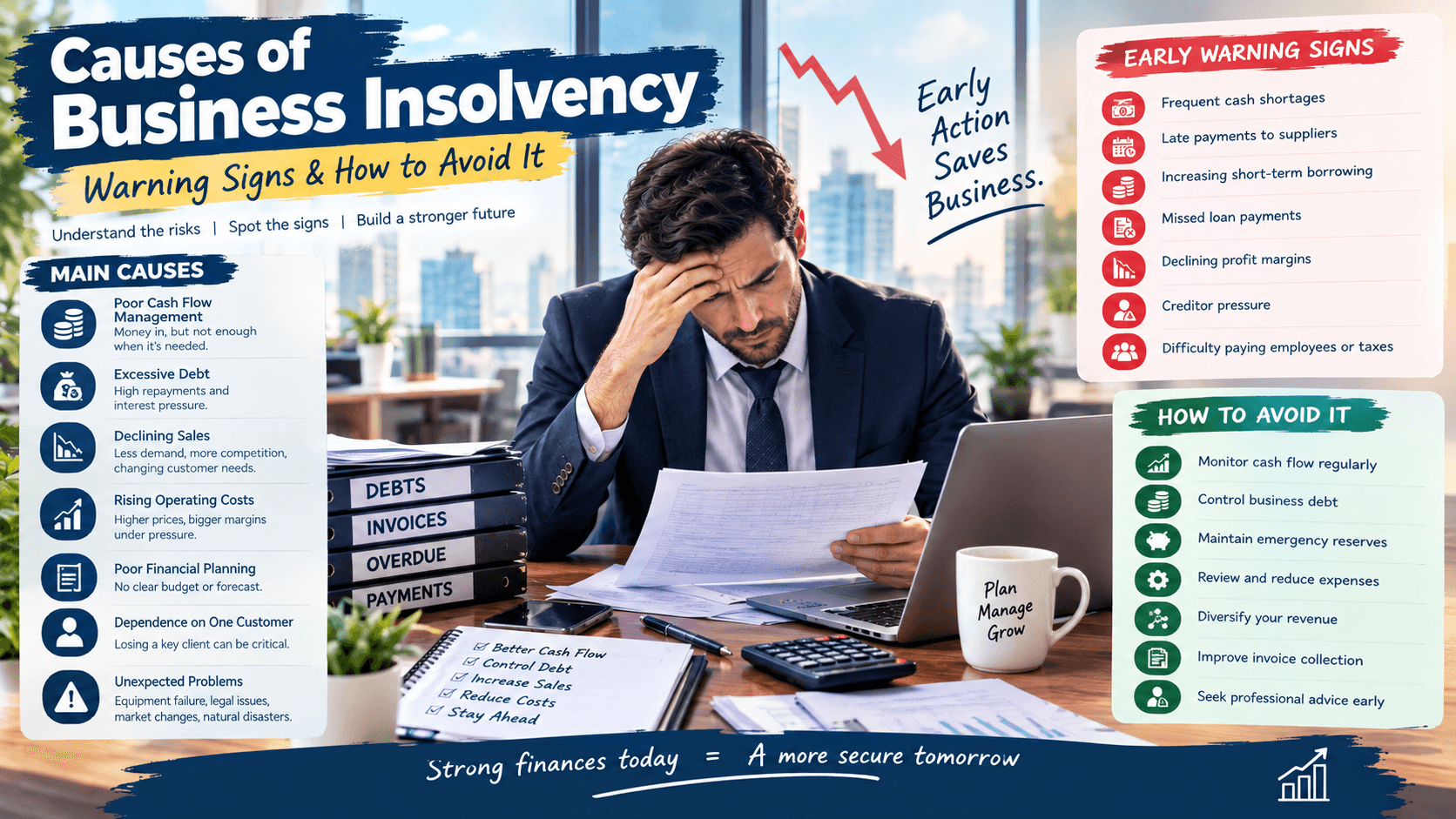
Poor Cash Flow Management
Many businesses fail because they run out of working capital. Delayed customer payments, excessive expenses, and inadequate budgeting can quickly create cash shortages.
Declining Revenue
Changes in market demand, increased competition, or economic downturns may reduce sales and profitability.
Excessive Debt
Taking on too much debt can become difficult to manage, especially when interest rates rise or revenue declines.
Rapid Expansion
Growth can be beneficial, but expanding too quickly without adequate financial planning may strain resources and create liquidity challenges.
Economic Uncertainty
Inflation, supply chain disruptions, and changing consumer spending habits can negatively impact business performance.
Early Warning Signs of Insolvency
Identifying financial problems early can improve the chances of recovery.
Common warning signs include:
Persistent cash flow shortages
Difficulty paying suppliers on time
Increasing debt levels
Declining profit margins
Frequent borrowing to cover operating expenses
Legal actions from creditors
Missed payroll obligations
Business owners should regularly monitor financial reports and key performance indicators to identify risks before they become severe.
The Impact of Insolvency
Insolvency can affect multiple stakeholders.
Employees
Financial distress may result in workforce reductions, delayed salaries, or uncertainty regarding future employment.
Creditors
Suppliers and lenders may experience delayed payments or financial losses.
Customers
Service disruptions and reduced operational capacity can impact customer satisfaction and trust.
Business Owners
Owners may face financial pressure, reputational challenges, and difficult strategic decisions.
Recovery and Restructuring Strategies
Although insolvency is serious, recovery may be possible through careful planning and professional guidance.
Improve Cash Flow Management
Businesses should evaluate expenses, accelerate receivables, and improve budgeting practices to strengthen liquidity.
Negotiate with Creditors
Many creditors prefer repayment arrangements over costly legal proceedings. Negotiating revised payment schedules may provide temporary relief.
Reduce Operating Costs
Reviewing unnecessary expenses and improving operational efficiency can help preserve cash.
Restructure Debt
Businesses may explore refinancing options or debt restructuring programs to reduce financial pressure.
Focus on Core Revenue Sources
Prioritizing profitable products and services can improve financial performance and support recovery efforts.
Seek Professional Advice
Accountants, financial advisors, and insolvency practitioners can help businesses assess options and develop recovery plans.
Preventing Future Financial Distress
Prevention is often more effective than recovery.
Business owners can reduce insolvency risk by:
Maintaining strong cash reserves
Monitoring financial performance regularly
Diversifying revenue streams
Managing debt responsibly
Developing contingency plans
Investing in financial forecasting tools
A proactive approach to financial management can improve resilience during challenging economic conditions.
The Role of Technology in Financial Stability
Modern financial software and analytics platforms provide valuable insights that help businesses identify risks early.
Technology can assist with:
Cash flow forecasting
Expense tracking
Financial reporting
Risk assessment
Budget planning
These tools enable more informed decision-making and improve overall financial visibility.
Looking Ahead
As economic conditions continue to evolve, businesses must remain adaptable and financially disciplined. Organizations that prioritize strong financial management practices are better positioned to navigate uncertainty and respond to changing market conditions.
While insolvency can present significant challenges, it can also serve as a catalyst for restructuring, innovation, and long-term improvement.
Conclusion
Business insolvency is a serious issue that requires prompt attention and strategic action. Understanding its causes, recognizing warning signs, and implementing effective recovery strategies can help companies overcome financial difficulties and build a more sustainable future.
With careful planning, responsible financial management, and professional support when needed, many businesses can successfully navigate periods of financial distress and emerge stronger than before.