

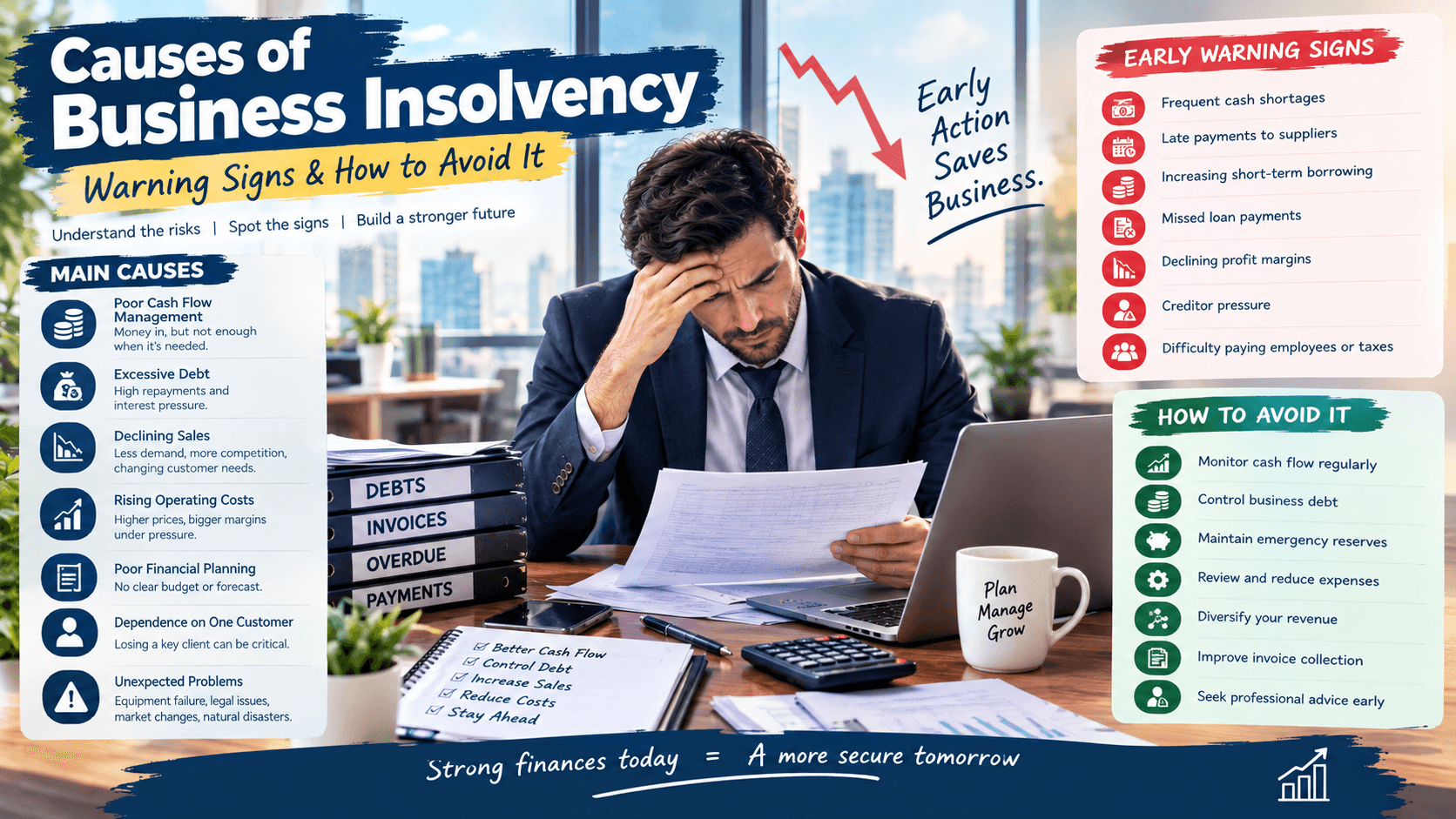
Business insolvencies remain a significant concern for organizations worldwide in 2026. Rising operational costs, higher interest rates, supply chain challenges, and shifting consumer behavior continue to create financial pressure across multiple industries. While many businesses have adapted to changing economic conditions, others face growing risks that require careful planning and strategic decision-making.
Understanding current insolvency trends can help business owners identify potential threats and take proactive measures to strengthen financial stability.
Rising Costs Continue to Impact Businesses
One of the biggest challenges facing companies in 2026 is the continued increase in operating expenses.
Many businesses are experiencing higher costs related to:
Energy and utilities
Labor and wages
Transportation and logistics
Raw materials
Technology infrastructure
When these costs rise faster than revenue, profit margins can shrink significantly, increasing insolvency risks.
Higher Borrowing Costs Create Financial Pressure
Many businesses rely on loans and credit facilities to fund operations and growth initiatives.
However, elevated interest rates have increased the cost of borrowing for many organizations.
As debt servicing expenses grow, companies may face:
Reduced cash flow
Lower profitability
Increased refinancing challenges
Greater financial vulnerability
Businesses with substantial debt obligations must carefully monitor their financial position and repayment capacity.
Small Businesses Face Unique Challenges
While large corporations often have access to greater financial resources, small and medium-sized enterprises frequently operate with tighter margins and fewer reserves.
Common challenges include:
Limited access to capital
Dependence on a small customer base
Cash flow volatility
Difficulty absorbing unexpected expenses
As a result, smaller businesses may be more vulnerable during periods of economic uncertainty.
Supply Chain Risks Remain a Concern
Although supply chains have improved in many regions, disruptions continue to affect businesses in certain sectors.
Potential challenges include:
Shipping delays
Inventory shortages
Supplier instability
Geopolitical uncertainty
Organizations that diversify suppliers and strengthen procurement strategies are often better prepared to manage these risks.
Technology Is Improving Financial Visibility
One positive trend is the growing adoption of financial technology solutions.
Modern software platforms help businesses:
Forecast cash flow
Monitor expenses
Track profitability
Manage debt obligations
Identify financial risks earlier
Improved visibility allows business leaders to make more informed decisions and respond quickly to changing conditions.
Industry Sectors Facing Elevated Risk
While insolvency can affect any business, certain sectors may face greater exposure due to market conditions.
Industries often under pressure include:
Retail
Construction
Hospitality
Transportation
Manufacturing
These sectors can be particularly sensitive to economic fluctuations, consumer spending patterns, and financing costs.
The Growing Importance of Restructuring
Many organizations are exploring restructuring strategies before financial problems become unmanageable.
Common approaches include:
Debt restructuring
Cost optimization programs
Asset sales
Operational improvements
Business model adjustments
Early action often provides businesses with more options and increases the likelihood of successful recovery.
Cash Flow Management Remains Critical
Regardless of industry, cash flow remains one of the most important indicators of business health.
Companies should focus on:
Accelerating customer payments
Managing inventory efficiently
Reducing unnecessary expenses
Maintaining adequate reserves
Monitoring key financial metrics
Strong cash flow management can significantly reduce insolvency risks.
Building Financial Resilience
Organizations that prioritize resilience are generally better positioned to withstand economic challenges.
Key strategies include:
Diversifying revenue streams
Maintaining emergency reserves
Investing in technology
Strengthening customer relationships
Improving operational efficiency
Financial resilience helps businesses remain adaptable during uncertain conditions.
Looking Ahead
While economic conditions may continue to evolve throughout 2026, businesses that remain proactive and financially disciplined can improve their ability to navigate challenges successfully.
The companies most likely to thrive are those that continuously monitor risks, embrace innovation, and maintain strong financial foundations.
Conclusion
Insolvency trends in 2026 highlight the importance of effective financial management, strategic planning, and operational flexibility. Rising costs, borrowing challenges, and economic uncertainty continue to create risks for businesses across multiple industries.
However, organizations that focus on cash flow management, financial resilience, and proactive decision-making can reduce insolvency risks and position themselves for sustainable long-term success.